The short answer: typical exhibition stand costs range from about £1,700 for a basic UK shell scheme up to £100,000+ for large custom builds at major international shows. Most small to mid-size exhibitors spend between £8,000 and £40,000 per event once everything is factored in.
Exhibiting at trade shows can be a pivotal moment for any business, providing opportunities for networking, lead generation, and brand visibility. This guide is designed for businesses and marketing professionals planning to exhibit at trade shows, as understanding trade show costs is essential for developing a realistic trade show budget and ensuring a successful event.
But here’s what many first-time exhibitors miss—exhibition stand cost isn’t just about the physical structure. It includes design, build, graphics, space rental, venue services, logistics, travel, marketing, and additional features such as lighting, furniture, and accessories that can be added to customize and elevate your stand. Understanding this full picture is essential before you commit to exhibiting at any trade show.
Costs vary significantly based on several factors: your country (US, UK, South Africa), stand type (shell scheme, modular, or custom built), and event size (from compact 3m x 2m spaces to sprawling 20m x 20m exhibition presences). A 10x10 trade show booth in Orlando will have a very different price tag than a double-decker stand at a major London exhibition.
This guide breaks down every cost driver, provides regional examples with real numbers, and offers practical budgeting tips. Each section is designed to be scannable, with bullet-led explanations and concrete figures you can use to plan your exhibition participation.
Key Cost Considerations for Your Exhibition Stand
Exhibition stand cost is best understood as the combination of two major elements: the physical stand itself (design, build, and graphics) and all the show-related expenses that surround it (space rental, services, logistics, staffing, and marketing).
Main Cost Categories
Here are the main cost categories you need to budget for:
Stand Space Rental – The floor area you rent from exhibition organizers.
Stand Type – Shell scheme, modular stands, or custom build.
Services – Power, Wi-Fi, rigging, cleaning, and other venue fees.
Logistics – Shipping, storage, and material handling.
Staffing and Travel – Your team’s flights, accommodation, and per diems.
Marketing Materials – Brochures, giveaways, lead capture tools, and pre-show marketing.
For planning purposes, many exhibitors allocate their total budget roughly as follows:
40–50% goes to the stand itself,
20–30% to floor space,
25–30% to everything else (services, logistics, people, and marketing).
These percentages shift depending on show location and stand complexity, but they provide a useful starting framework.
Costs involved break down into two types: fixed costs that are largely locked in once you book, and variable costs that change with each event. Both must be planned from the outset to avoid unexpected expenses derailing your trade show budget.
Fixed Costs
Fixed costs are those committed once you sign contracts:
Stand space rental
Core stand design and build
Standard electrics
Basic furniture
Shipping to the show
Booth space fees represent a significant fixed expense. UK shows typically charge £300–£600 per square meter for raw space. A 3m x 3m footprint (9m²) might cost £2,700–£5,400 just for the floor—before you’ve built anything on it. In the US, expect to pay $38–$150 per square foot for comparable spaces, with premium shows commanding the higher end.
Design and build costs depend heavily on stand type:
Simple shell scheme graphics packages start from around £1,700
Modular stand systems typically begin at £3,000–£5,000
Custom builds for mid-sized spaces start from £10,000 and can exceed £50,000
Utilities are usually mandatory charges set by the organiser or venue. Mains electricity connection, basic lighting, and sometimes carpet are non-negotiable line items in your budget breakdown.
Essential furniture (reception counters, stools, meeting tables) and crating/shipping of the stand system are predictable expenses that should be booked early to secure better rates.
Variable Costs
Variable costs change with each event and are harder to predict precisely:
Staff
Travel expenses
Hotels
Catering
Giveaways
Extra marketing
Last-minute services
Staffing costs include:
Salaries or day rates for your exhibition team
Overtime and weekend premiums
Opportunity cost of taking salespeople out of the field for 2–4 days
Travel and accommodation add up quickly. For example, four staff travelling to London or Frankfurt for three days can easily incur £2,000–£5,000 in flights, hotels, and per diems. Book as soon as show dates are published—hotels near major venues fill fast and prices spike.
Marketing and activations range from a few hundred to several thousand pounds per show. This includes printed brochures, promotional materials, lead capture tools, competitions, and product samples that help you generate leads.
Miscellaneous expenses and contingency are often overlooked. Organisers frequently charge rush fees, late-order surcharges, or extra cleaning. Building a 5–10% contingency line into your budget protects against these surprises.
What Influences the Cost of Your Exhibition Stand?
There’s no single “right” price for an exhibition stand. The true cost is driven by your objectives, stand size, design complexity, and show selection.
Defining Your Objectives
Before diving into quotes, define your goals first. Are you aiming for high lead volume, launching a new product, or building brand awareness? Your expected ROI should shape your investment level—not the other way around.
Main Cost Drivers
The main factors influencing stand cost are:
Stand size and shape – Footprint drives almost every other expense
Stand type – Shell scheme, modular, or custom built
Design features and technology – LED walls, meeting rooms, interactive displays
Show and venue choice – Premium locations command premium prices
Think in terms of cost per qualified lead or cost per meeting booked, not just headline build cost. A £40,000 stand that generates 200 qualified leads is more cost effective than a £15,000 stand that produces 20 weak contacts.
Stand Size and Layout
Your footprint drives almost every other cost: materials, graphics, furniture, rigging, and staffing levels. A compact 3m x 3m modular stand might cost £4,000–£8,000 all-in for hardware and graphics. Step up to a 10m x 8m open-two-sides space with a feature tower, and you’re looking at £40,000+.
Layout factors also affect price. Corner and island plots cost more in space fees but often deliver higher footfall and better lead flow. An island position at a major show might add 20–30% to your space rental, but the increased visibility can justify the premium through more visitor engagement.
Recommended Stand Sizes for Exhibitors
First-time exhibitors often start with 9–18m² (roughly 3m x 3m to 4.5m x 4m)
Companies with proven exhibition ROI typically grow to 36–50m²
Large international presences can exceed 100m²
One critical warning: avoid over-sizing your stand if you cannot staff it properly. A smaller but busy stand is far more effective than a large empty one. If you expect three team members, a 6m x 4m space is usually the maximum you can work effectively.
Stand Type: Shell Scheme, Modular, or Custom Build
Definitions of Stand Types
Shell scheme stands are basic frameworks provided by the organizer, typically including walls, carpet, and lighting. They’re the entry point for many exhibitors.
Modular stands use a reusable framework that can create various shapes and features. These systems offer more flexibility and a more premium feel than shell schemes.
Custom-built exhibition stands are designed and built from scratch, offering unique designs but are typically the most expensive option. They use timber, bespoke structures, and immersive stand features.
Pop-up stands are portable and easy to assemble, making them a popular choice for first-time exhibitors. They offer a simple, lower-cost entry point for very small spaces but significantly limit creativity and audience engagement.
Cost Ranges by Stand Type
Shell scheme: Cost from around £1,700 for a small UK package including walls, carpet, and basic lighting. Upgrades via printed panels, a counter, and rented furniture add £500–£2,000. Limited customization but minimal hassle and lower risk.
Modular: Price ranges typically £3,000–£30,000+ depending on size and configuration. Major advantage: reconfigurable across multiple events and years. Graphics can be updated while retaining the structural framework.
Custom build: Budgets usually start around £10,000–£15,000 for smaller footprints. Large double-deckers or experiential builds can reach £100,000+. Higher costs but maximum brand impact and differentiation.
Pop-up: Lower-cost, portable, and easy to set up, but with limited design options.
Design Complexity, Features, and Technology
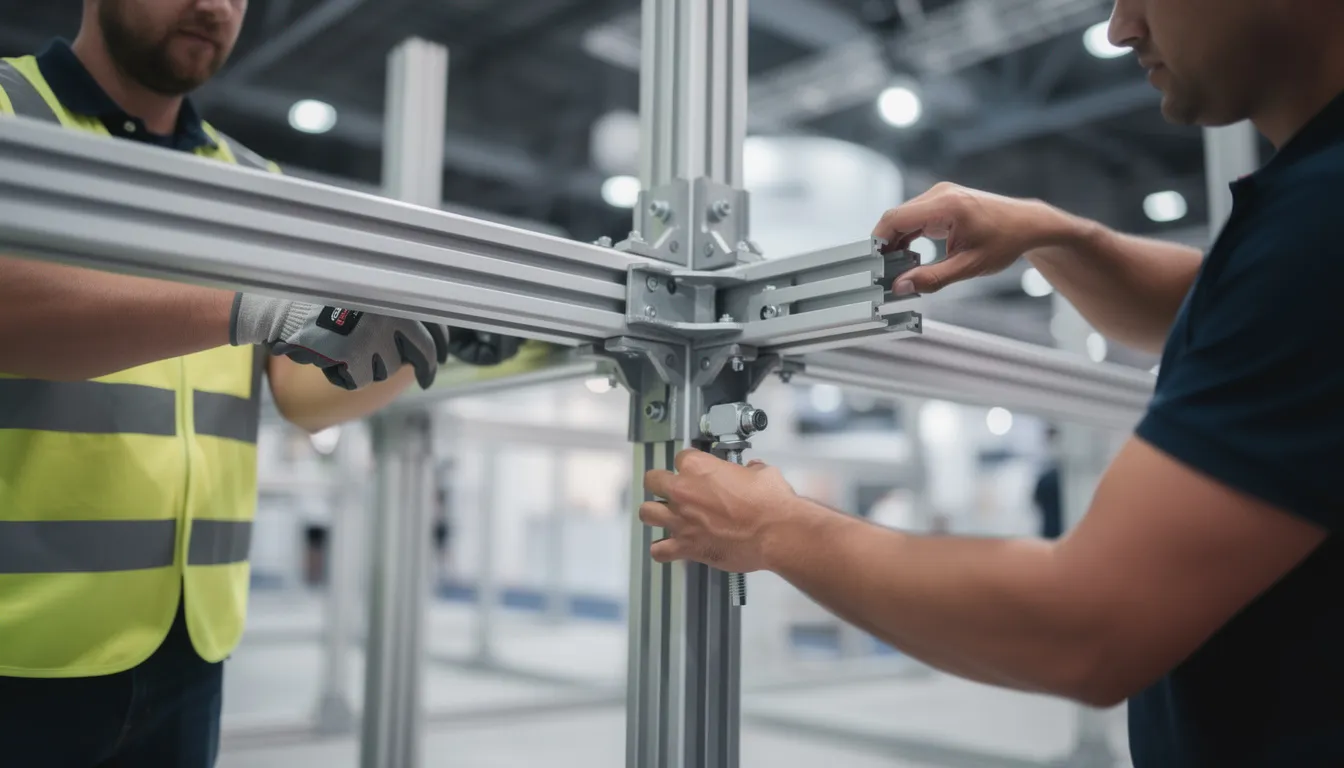
Intricate architecture—curves, double-height walls, hanging canopies—and high-end finishes quickly inflate fabrication cost and labor costs for installation.
Key Feature Cost Drivers
Integrated LED video walls (£3,000–£5,000 rental, potentially doubling with rigging and power)
Interactive touchscreens and product demo stations
Private meeting rooms with furniture and AV equipment
Ceiling rigging and suspended elements
Coffee machines and hospitality zones
Additional features such as lighting, furniture, and accessories that enhance or customize your stand
A modest LED video wall might be quoted at £3,000–£5,000 to rent, but the total cost can double or triple once rigging, power connection, and show labour are added. Always request fully-loaded quotes that include installation.
Design Tips for Cost-Effective Impact
Prioritise a few high-impact features (a strong lightbox backwall and a clear demo area) over many smaller add-ons that inflate cost but dilute your message. Simpler, cleaner designs can be both more cost effective and more visually effective, especially in crowded exhibition halls. High-quality graphics and branding are essential for attracting visitors to an exhibition stand and can be reused at future events.
Negotiation, Reuse, and Timing
Early booking is one of the most reliable ways to control exhibition costs:
Space booking – Prime locations sell first; early commitment often secures discounts.
Hotels and flights – Prices spike as event dates approach.
Services – Late orders through the exhibitor portal attract significant surcharges.
Reuse Strategies
Use modular structures and graphics across a 2–3 year programme.
Build a standard kit of parts (counters, lightboxes, back walls) scalable for different stand sizes.
Negotiate multi-show or multi-year deals with your trade show booth builder.
When reviewing quotes, include a contingency line and query any vague “miscellaneous” or “project management” fees before signing off. These can hide significant costs that only become apparent later.
How Much Does Location Affect Exhibition Stand Cost?
Geography heavily influences both space rates and all supporting costs: labour, logistics, accommodation, and services. US, UK, and South African examples provide a useful spread of typical price levels.
Regional Cost Comparison Table
Region | Stand Space Cost (per m²/sqft) | Design/Build Cost (per m²/sqft) | Notes |
|---|---|---|---|
UK | £300–£600 per m² | £1,700+ (shell) to £50,000+ | London venues at higher end |
US | $38–$150 per sqft (space) | $225–$500 per sqft (build) | Union labor can increase costs |
South Africa | R8,750–R25,000 per m² | R12,000+ per m² (custom) | Lower base, but complex builds rise quickly |
Exhibition Stand Costs in the US
US trade show stand pricing is typically expressed per square foot for design/build plus show services, especially at major venues like Las Vegas, Orlando, and Chicago.
Guideline Pricing
Approximately $225–$500 per square foot for custom or modular builds
This range includes design, fabrication, basic AV, shipping, and installation
Practical Examples
Booth Size | Square Footage | Estimated Total Cost |
|---|---|---|
10’ x 10’ | 100 sqft | $8,000–$13,000 |
10’ x 20’ | 200 sqft | $15,000–$33,000 |
20’ x 20’ | 400 sqft | $90,000–$200,000 |
30’ x 30’+ | 900+ sqft | $150,000+ |
Custom double-decker stands, large LED walls, and complex rigging at shows such as CES or HIMSS can push booth cost well beyond $250,000.
Important note: Union labour rules in some US cities significantly increase installation and on-site change costs compared with many European venues. Always factor this into your trade show budget when exhibiting in cities like Chicago or New York.
Exhibition Stand Costs in the UK
UK exhibitors typically pay in square meter rates for space rental at venues such as ExCeL London, NEC Birmingham, and Manchester Central.
Common Pricing
Around £500 per m² for stand space at major shows
London venues often sit at the top end due to demand and higher overheads
Regional shows may offer £300–£400 per m²
Example Calculation
A mid-sized 6m x 4m space (24m²) at £500 per m² equals approximately £12,000 just for the floor—before adding stand design, build, and additional services.
Double-Decker Stand Costs
Double-decker stands in the UK can cost upwards of £1,500 per m² due to increased engineering requirements, structural checks, and fire and safety compliance.
Cost Reduction Strategy
Careful reuse of modular frameworks and graphics across events like ICE London, Bett, and major construction shows can significantly lower total programme cost. A £25,000 modular system used across three shows effectively costs £8,333 per event—far less than three separate builds.
Exhibition Stand Costs in South Africa
South African stand costs are quoted per m² with a lower price base than the US or UK, though complex builds rise quickly.
Benchmark Pricing
Approximately R8,750–R25,000 per m² for design and build
Price depends on stand size, complexity, and single- or double-storey construction
Example Calculation
A 6m x 6m (36m²) custom stand at R12,000 per m² totals approximately R432,000 for structure and finishes, before factoring in space rental and services.
Popular multi-storey stands at large Johannesburg or Cape Town expos cost more due to increased material usage and engineering demands. However, modular or system-based stands can offer a cost effective alternative while still achieving a high-end aesthetic in South African venues.
Typical Exhibition Stand Budget Breakdown
Understanding the mix of costs helps avoid under-budgeting essential items like electrics and logistics.
Indicative Percentage Split
Indicative percentage split for a typical small-to-mid UK or European show:
50% – Stand design, build, graphics, and installation
20–25% – Space rental
25–30% – Services, logistics, staffing, travel, and marketing
Illustrative Example for a £30,000 Total Budget
Category | Percentage | Amount |
|---|---|---|
Stand design/build/graphics | 50% | £15,000 |
Space rental | 25% | £7,500 |
Services, logistics, people | 25% | £7,500 |
For larger programmes or US shows, travel and installation labour can represent a higher proportion of total budget—sometimes 30–40% when exhibiting internationally with larger teams.
Stand Design, Build, Graphics, and Installation
This is typically the single largest line item, especially for first-time builds or major rebrands.
What’s Included
Design time and 3D visuals
Structural engineering (where required for larger builds)
Fabrication and printing
Lighting fixtures
Installation and dismantle labour
High-quality, reusable modular systems may have higher upfront cost but reduce the expense of subsequent shows by reusing structure and graphics. A booth builder who specialises in modular solutions can often demonstrate 30–40% savings over a three-year programme compared to repeat custom builds.
Storage and refurbishment between future events should be included in this category for multi-show programmes. Always request transparent quotes that separate hardware, graphics, labour, and show services to understand where your money is going.
Floor Space Rental
Floor space is the foundation of your budget and non-negotiable once contracted. Choose strategically.
Position Premiums
Corner plots typically cost 10–15% more than inline positions
Island plots (open on all sides) can command 20–30% premiums
These positions often yield higher visibility and better traffic flow
Numeric Guidance
Europe: £300–£600 per m²
US: $50–$150 per sqft
Even modest footprint increases add thousands to your invoice
Cost Control Tactics
Book early for better position selection and potential discounts
Consider non-peak days or less premium halls
Evaluate regional shows with lower space costs
Align stand size with confirmed marketing plans and realistic staffing
Services, Logistics, and Other Operational Costs
Typical Services Ordered Through the Organiser
Electrics and power connections
Wi-Fi and dedicated internet
Water supply and drainage
Rigging points for suspended elements
Cleaning and waste disposal
Logistics Costs Include
Shipping to and from the venue
Customs clearance (for international shows)
On-site material handling (drayage)
Storage before and after the event
Example Service Charges
Power outlet: £50–£200 per socket
High-speed dedicated internet: £300–£800 per event
Rigging point: £100–£300 each
Drayage: $500–$2,000 per event in the US
Many venues require official contractors for offloading and freight, limiting cost-cutting options. Careful pre-show planning—consolidating shipments, ordering only necessary services, avoiding last-minute requests—is essential for controlling other costs.
Additional Costs Beyond the Stand Itself
Many first-time exhibitors under-budget non-stand items, which can easily account for 30–50% of total spend. These additional costs are essential for converting your stand investment into actual leads and sales.
Key Areas to Budget
Venue fees and on-site additional services
Catering and giveaways
Staffing, travel, and accommodation
Pre-show and at-show marketing strategy
Cutting these items too aggressively undermines ROI. List all expected extras per show and assign realistic cost ranges before committing to a stand design.

Venue Fees and Stand Services
Organisers and venues often charge separately for items you might expect to be included:
Power connection (beyond basic supply)
Additional lighting circuits
Water supply for coffee machines or sinks
Waste disposal
Daily cleaning and vacuuming
Complex stands with coffee machines, fridges, ovens, or heavy AV walls need more power—and therefore higher fees. A stand with a large LED wall might require 10kW of power versus 3kW for a standard setup, tripling the electrical charges.
Planning Tips
Review the technical manual early
Ask your booth builder to specify exact service needs
Order through the exhibitor portal before early-bird deadlines
Late ordering attracts significant surcharges (sometimes 30–50% premiums)
Catering, Giveaways, and Visitor Experience
Offering coffee, snacks, or light refreshments greatly improves dwell time and engagement on your stand—but comes with direct and service costs.
Common Hospitality Items
Bean-to-cup coffee machines (rental or venue supply)
Branded water bottles
Light snacks and biscuits
Popular Giveaways
Branded pens and notebooks
Tote bags
Power banks
USB drives
Some venues charge corkage or require catering through approved suppliers, increasing cost per head. Choose giveaways that align with your brand and offer real perceived value to potential customers—generic items often end up in bins.
Budget Control
Set a per-visitor budget for hospitality and gifts. If you expect 200 stand visitors, allocating £5–£10 per person gives you a £1,000–£2,000 budget for this category.
Staffing, Travel, and Accommodation
The people on your stand—sales, technical experts, product managers—are crucial to converting interest into qualified leads.
Typical Cost Elements
Flights or train tickets
Hotels close to the venue
Daily allowances for food and taxis
Overtime or weekend premiums
Realistic Example
For a three-day European show with two travel days, a team of five may incur £4,000–£10,000 in travel and living expenses depending on city and booking timing.
Best Practices
Book accommodation and transport as soon as show dates are published
Major events (CES, Mobile World Congress, Hannover Messe) command premium hotel rates
Consider staff rotation to manage fatigue while ensuring at least one decision-maker is always present
Share rooms where appropriate to reduce costs
Pre-Show and On-Site Marketing
Marketing spend drives visitors to your stand and supports follow-up after the event. This directly influences ROI.
Common Elements
Email campaigns to your database
Social media promotion
Show app listings and sponsored content
On-site signage and wayfinding
Physical Collateral
Brochures and product sheets
Business cards
Branded folders and presentation materials
Lead Capture Tools
Scanning apps (often provided by organisers)
QR codes linking to landing pages
Prize draws and competition entry forms
Digital forms on tablets
Marketing messages and visuals should align tightly with your stand graphics so attendees immediately recognise your value proposition when they arrive.
How to Control Exhibition Stand Costs Without Losing Impact
Controlling costs doesn’t mean compromising on results. The goal is cost-efficiency: focusing spend where it most affects visitor experience and lead quality.
Core Tactics for Cost Control
Choose modular over one-off builds.
Reuse elements across multiple events.
Book early for space, services, and hotels.
Simplify design details that add little to ROI.
Treat the first year as a learning curve. Track costs and returns carefully to refine future budgets. Consulting with a specialist stand designer and booth builder helps benchmark quotes and identify smart savings without compromising safety or aesthetics.
Smart Ways to Save Money on Your Stand
Modular and reconfigurable systems:
Use the same core kit for 3m x 3m, 6m x 4m, and larger configurations.
Replace only event-specific graphics while retaining hardware.
Amortise investment over 2–3 years and multiple shows.
Rental versus purchase:
Rent AV equipment and specialist furniture if you exhibit infrequently.
Consider renting large LED walls or double-deck additions only when needed.
Graphics strategy:
Design in reusable sections: brand backdrops plus event-specific overlays.
Most panels can then be reused at multiple shows.
Update messaging graphics while keeping hero imagery.
Logistics savings:
Consolidate shipments to reduce handling fees.
Use lighter booth materials to lower freight costs.
Avoid split deliveries that incur multiple handling charges.
Design simplification:
Fewer curves and less bespoke joinery significantly reduce fabrication time.
Clean, bold designs often outperform complex, busy ones.
Focus budget on lighting and key visual elements.
The Value of Using a Professional Stand Designer and Builder
Experienced designers and builders manage the entire process: concept, 3D design, engineering checks, production, logistics, installation, dismantle, and storage.
Benefits of Professional Project Management
Reduces risk of costly mistakes (non-compliant structures, under-specified power, missed deadlines)
Single point of contact coordinating with organiser, venue, and service suppliers
Knowledge of venue-specific requirements and regulations
While professional trade show booth builder services add a fee, their expertise often saves money overall by:
Optimising materials for weight and durability
Maximising reusability across shows
Ordering services efficiently to avoid surcharges
Identifying cost-effective alternatives for expensive features
When evaluating potential partners, ask for case studies with budget ranges and measurable results (leads generated, meetings booked) to judge value—not just price.
Frequently Asked Questions About Exhibition Stand Costs
This section answers common cost-related questions concisely.
How Much Should I Budget for a Small Stand?
For a basic 3m x 3m stand at a mainstream UK or European show, a realistic all-in budget (space, stand, services, and basic travel) is typically £8,000–£15,000.
This assumes:
Shell scheme or modest modular build
Simple graphics package
Small team of 2–3 staff
Two or three nights’ accommodation
Very low-cost options exist but tend to compromise on impact and functionality, risking poor ROI. In the US, comparable 10’ x 10’ booths typically run $10,000–$25,000 when travel and services are included.
Always add a 5–10% contingency to cover last-minute service or logistics changes.
How Much Does a 6m x 6m or 20’ x 20’ Booth Typically Cost?
A 6m x 6m (or 20’ x 20’) island stand is a common “step up” size where costs scale significantly due to increased footprint and visibility.
US Guidance
Using $225–$500 per sqft, a 400 sqft stand may cost $90,000–$200,000 once design, build, services, and installation are included.
European Guidance
A 36m² island stand with a modular or hybrid custom system might range from €40,000–€80,000 including space, build, services, and core travel.
Double-deck, highly experiential, or heavily AV-led stands typically sit at the top or above these ranges. Request itemised quotes to understand which elements drive higher costs at this size.
Is It Cheaper to Rent or Buy an Exhibition Stand?
Renting is usually cheaper for one-off or infrequent events:
Avoids capital outlay
No storage costs between shows
No maintenance or refurbishment expenses
Buying a modular system becomes cost effective when you:
Plan multiple shows over 2+ years
Can spread the investment across events
Need consistent branding across various factors and venues
Hybrid approaches work well: own a core modular kit and rent specialist elements (double-deck additions, large LED walls) when needed.
Calculate a 2–3 year programme budget comparing total rental versus ownership costs, including graphics refresh and storage. A professional stand partner can model both scenarios.
How Can I Tell If My Exhibition Spend Is Delivering ROI?
Before the Show
Define measurable objectives: number of leads, meetings, demos, or orders targeted
Set up CRM tags or campaign codes for tracking
After the Show
Calculate cost per lead: Total show spend ÷ leads captured
Calculate cost per qualified opportunity: Total spend ÷ pipeline value generated
Track immediate and longer-term sales linked to show contacts
Softer Metrics to Consider
Press coverage secured
Partnership conversations initiated
Website traffic spikes around the event
Social media engagement and reach
Use these insights to refine future stand size, booth design, and budget allocation for better returns at future events.
Conclusion: Planning an Exhibition Stand Budget That Works
Exhibition stand costs vary widely, but with clear objectives and careful planning, you can create an effective presence at almost any budget level.
Key Takeaways
Small UK stands typically start around £8,000–£15,000 all-in
Large custom island booths in the US or Europe regularly exceed $100,000/€100,000
Average trade show participation requires careful planning across multiple cost categories
Break your budget into clear categories: space, stand, services, people, and marketing. Assign realistic figures to each and include a 5–10% contingency for unexpected expenses.
The most reliable levers for controlling costs without losing impact are:
Thoughtful, purpose-driven design
Reuse of modular elements across shows
Early booking of space, services, and travel
Partnering with an experienced booth builder
Finally, evaluate systematically after each show. Track what you spent, what results you achieved, and where the money could have worked harder. Every future exhibition stand investment then becomes more efficient—and more effective.
Leave a lasting impression on your target audience by working with Booth Vision, a reputable exhibition stand design company in UK. We offer end-to-end exhibiting solutions which include installation, dismantling, 24/7 on-site support, shipping and storage with no hidden prices. We are among the top exhibition stand builders in UK because of our quality of work, timely delivery, and utmost professionalism. Our main goal is to enhance your brand presence and visibility and help your brand generate high-quality, qualified leads. We have more than 16 years of experience in the industry, which makes us a reliable and budget-friendly stand designer in UK for both big and small companies.
ReplyDelete